Starting Hard Ball Cricket: The Junior Cricket Kit Your Child Needs
What is compulsory, what can wait a season, and the grade shortcut that gets sizing close.
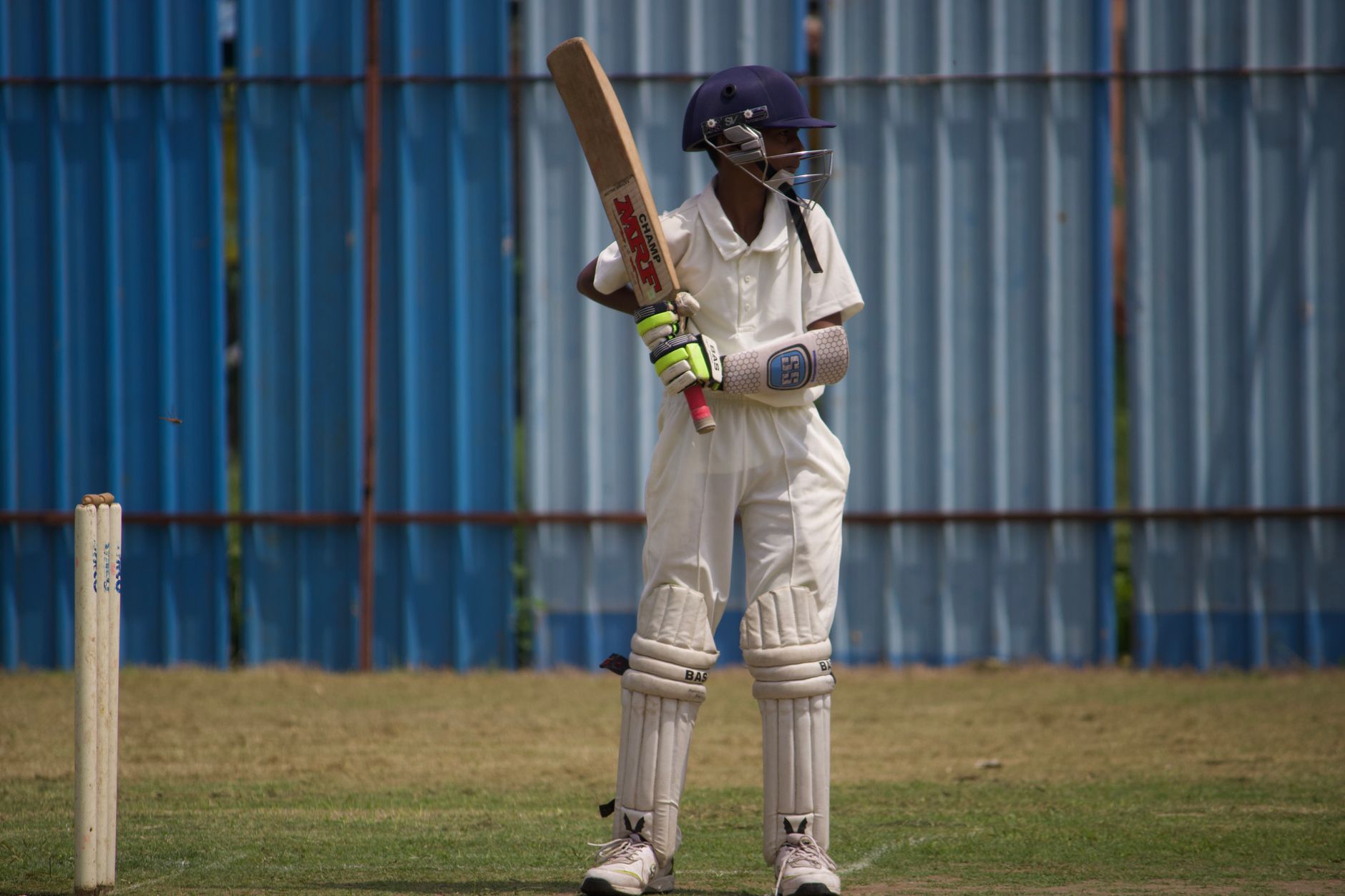
A junior cricket kit for a first hard ball season needs six things: a correctly sized bat, pads, gloves, a helmet, an abdominal guard and something to carry it all in. A cricket ball and a thigh pad follow close behind. Everything else on the shop wall can wait a season, and knowing which is which saves a parent a surprising amount of money.
The question we get most often when school cricket starts is some version of what does he actually need. Usually from a parent holding a school kit list that runs to fifteen items. Some of it is genuinely compulsory. Some of it is for a player two or three seasons ahead of where their child is now.
Which items are needed to start hard ball cricket?
A child moving into hard ball cricket needs a bat sized to the player, batting pads, batting gloves, a helmet, an abdominal guard, a bag and a ball. That is the working list for a first season.
In rough order of how much it matters:
- Helmet. Compulsory for hard ball cricket, and the one piece to fit properly rather than guess at.
- Abdominal guard. Low-priced, small, and the single worst thing to be without. Buy two so one is always in the bag.
- Bat. Sized to height, not age. More on this below.
- Pads and gloves. Junior sizing, and they need to fit now rather than be grown into.
- Ball. Most players need their own ball for nets, because net sessions run on what the players bring.
- Bag. A junior duffle, a junior wheelie, or the combination of the two, a junior wheelie duffle.
- Whites and cricket shoes. Check the school’s requirement, since some specify a particular shirt.
If you would rather see the pieces side by side, our junior cricket gear is grouped by type.
What size cricket kit does a 10 year old need?
Usually a size 4 bat with junior pads and gloves, but height decides the bat rather than the birthday. Two ten year olds can be two bat sizes apart.
There is a shortcut that works well in South African schools, and it is the one parents actually find useful because it matches how the question gets asked. For a child of average height, bat size tracks school grade. A Grade 3 player takes a size 3, Grade 4 takes a size 4, and so on up the school. Grade 7 is the one exception, because no size 7 bat exists, so those players move into a Harrow.
What is worth knowing is where that shortcut stops working. A child well above or below average height for their year needs measuring properly. So does the tall, slight player, who often needs the length of a bigger bat but cannot handle its weight, and is better served by a shorter handle with a lighter pick-up.
Pads and gloves are simpler, because they come in fewer sizes. Small junior, junior, youth and small adult covers almost every school player, and small junior is the one that fits most eight and nine year olds of average height. Pads should reach comfortably above the knee roll with the player standing, and gloves should have a little room at the fingertips but no movement across the palm.
For the full height chart and the borderline cases, we wrote a separate cricket bat size guide that goes through it size by size.
Does a junior need their own cricket ball?
Yes, for nets. Most junior players are expected to bring a ball to practice, and a player without one spends the session waiting to use somebody else’s.
A junior ball is lighter than the senior version, at roughly four and three quarter ounces against five and a half, and age-group cricket is generally played with the lighter one. Check which ball the school uses before buying, because that answer also decides the helmet, and we come back to that below.
One ball is enough to start. They get lost, they get scuffed, and a first-season player is not getting through them fast enough to justify buying in quantity.
Is a helmet compulsory for junior cricket?
At every school and club we deal with, a helmet is required for any cricket played with a hard ball. This is not a preference or a parental judgement call.
The guidance that most of the game follows comes from the England and Wales Cricket Board’s safety guidance on young players, which sets out that players under 18 should wear a head protector when batting against a hard ball, and that a parental consent form excusing a child from wearing one should not be accepted in any form of the game. It applies in practice sessions too, not just matches.
How do I choose a junior cricket helmet?
Come and fit it in store, unless you already know the exact size from a previous helmet. Helmets are the one piece of junior kit where the differences are hard to read off a website, and the sizing is not consistent between makes.
Price is the honest part of this conversation. A top-end helmet runs well past a thousand rand, and very few South African parents want to spend that on an eight year old who may outgrow it in a season. So the range runs a good deal wider than that, and there are sound options lower down it. What changes as the price climbs is the shell material, the weight, the grille, and how much adjustment you get as the child grows.
The other thing worth knowing is that helmets are tested against different ball sizes, and a junior playing with the lighter age-group ball is in a different situation to one who has moved up to a full-size ball in open age cricket. That distinction is not obvious from looking at two helmets on a shelf, because they look much the same. It is the sort of thing our staff will walk you through with the actual helmets in front of you, which is the reason we would rather fit these in person than sell them blind.
Fit is the part no price bracket fixes. The helmet should not move when the player shakes their head, the grille gap should be too narrow for a ball to come through, and the gap between the peak and the grille needs checking on adjustable models, since that gap is where balls get through.
What junior cricket gear can wait a season?
Arm guards and chest guards can wait, and many players never need them at all. They become useful once the bowling speeds up, but a first-season player facing gentle bowling does not need them on day one.
A thigh pad is different, and it does become essential. Start a first-time player with a single small junior thigh pad, which is the one that takes the hits on the front leg. By their third or fourth season, when the bowling has real pace in it, move them to a properly fitted double thigh pad that covers the inside leg as well.
The reasoning on the rest is simple. Protective gear beyond the basics is a response to pace. A nine year old facing another nine year old is not getting hit hard enough for an arm guard to earn its place in the bag, and an over-kitted child moves badly and enjoys it less. Add the pieces as the cricket demands them.
Put the money into the bat and the helmet instead. Those two are the ones that affect how the player develops and how safe they are, and they are the two most often got wrong.
Which bag does a junior player need?
A junior duffle, a junior wheelie, or a junior wheelie duffle that does both. The choice is mostly about who carries it and how far.
A junior duffle is lighter and lower-priced to replace, and it suits a player whose kit still fits in one armful. A junior wheelie takes the weight off a small child walking from the car park to the nets, which matters more than it sounds once the bat, pads and helmet are all in there. The junior wheelie duffle is the middle option, and it is the one most parents settle on, because it wheels when the load is heavy and carries when the ground is rough.
Buy the bag last, once you know what is going in it. A bag bought first is usually a size out.
Getting the sizing right first time
Every one of our branches keeps a bat size chart on the shop floor for exactly this. Stand the player against it, check the bat reaches roughly the top of the thigh with the toe on the ground, and you have the size in about two minutes.
Bring the player rather than their height on a note, if you can. Half the fittings we do end up a size away from what the parent expected, usually because the child grew over winter or because last season’s bat was already too big and everyone adjusted to it.
Come in during the week if you want time. Saturday mornings once school cricket starts are busy, for obvious reasons. Our staff play club and school cricket themselves, so if you want an honest answer about whether the expensive bat is worth it for a Grade 5 player, ask, and you will get one.
Common questions
Which items does my child need to start hard ball cricket?
A bat sized to the player, batting pads, batting gloves, a helmet, an abdominal guard, a ball for nets and a bag to carry it. A single small junior thigh pad follows soon after. Whites, cricket shoes and a water bottle round it out. For a first hard ball season that is the whole list, and the helmet and abdo guard are the two nobody should skip.
What size cricket kit does a 10 year old need?
Usually a size 4 bat with junior pads and junior gloves, but height decides it rather than age. In South Africa the school grade is a useful shortcut: a Grade 4 player of average height generally takes a size 4. Measure if the child is noticeably tall or short for their year, because a bat one size too big does real damage to technique.
Does school grade decide junior cricket kit size?
For bats, near enough, if the child is average height for their year. Grade 3 takes a size 3, Grade 4 a size 4, and so on up. Grade 7 is the exception because no size 7 bat exists, so those players move to a Harrow. Pads and gloves follow the same rough progression but come in fewer sizes, so small junior, junior, youth and small adult cover most of it. Small junior generally fits eight and nine year olds of average height.
Does a junior cricketer need their own cricket ball?
For nets, yes. Junior players are generally expected to bring a ball to practice, and one without spends the session waiting on somebody else's. Age-group cricket usually uses the lighter junior ball at roughly four and three quarter ounces rather than the five and a half ounce senior ball. One ball is plenty to start with.
Is a helmet compulsory for junior cricket?
At every school and club we deal with, yes, for any cricket played with a hard ball. The widely adopted guidance, set out by the England and Wales Cricket Board and followed across the game, is that players under 18 wear a head protector for hard-ball cricket and that a parental waiver is not accepted. Treat it as non-negotiable rather than a preference.
How do I choose a junior cricket helmet?
Fit it in store unless you already know the exact size from a previous helmet, because sizing is not consistent between makes and the differences are hard to judge online. The range runs wide on price, and there are sound options well below the top end. Helmets are also tested against different ball sizes, so which ball your child's cricket uses matters, and that is easiest to explain with the helmets in front of you.
When does a junior need a thigh pad?
Sooner than most parents expect. A thigh pad becomes essential once the bowling has any pace in it. Start a first-time player on a single small junior thigh pad for the front leg, then move to a properly fitted double thigh pad covering the inside leg as well by their third or fourth season. Arm guards and chest guards can wait, and plenty of players never need them.
Which cricket bag suits a junior player?
A junior duffle, a junior wheelie, or a junior wheelie duffle that does both. A duffle is lighter and lower-priced to replace, a wheelie takes the weight off a small player walking to the nets, and the wheelie duffle is the middle option most parents settle on. Buy the bag last, once you know what is going into it.
How long will a junior cricket kit last?
Expect to change the bat roughly every season or two while they are growing, and the helmet whenever their head size changes or it takes a hard blow. Pads and gloves stretch further, often two seasons, because the sizing bands are wider. Plan on the bat being the recurring cost rather than replacing everything at once.